Table of Contents
Why Dubai South Has Become One of Dubai’s Most Watched Investment Destinations

Every real estate cycle has a geography that captures investor attention.
In the early 2000s, it was Dubai Marina. Later came Downtown Dubai, Business Bay, and Dubai Hills Estate. In recent years, much of the conversation has shifted southward, towards a district that was once viewed as a long-term vision but is increasingly becoming a tangible reality.
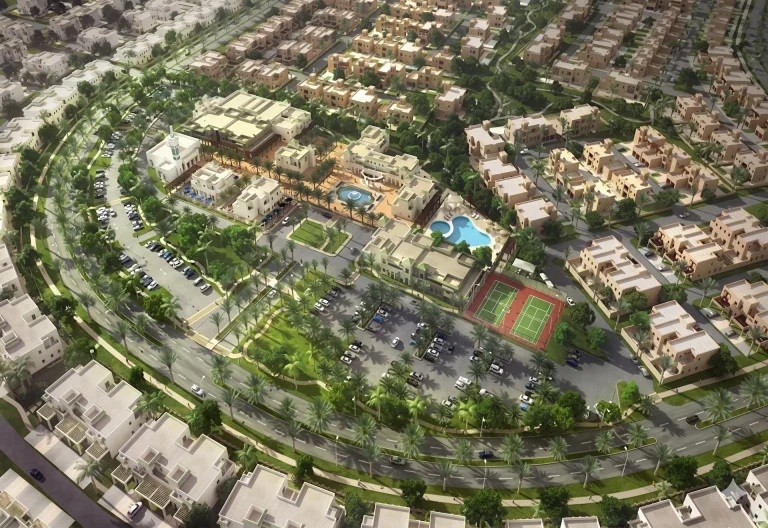
Dubai South is no longer simply the location of a future airport. It has evolved into one of the emirate’s largest master-planned urban developments, combining residential communities, logistics infrastructure, aviation facilities, business districts, and the legacy of Expo 2020 within a single ecosystem.
The numbers reflect this growing confidence. During Q1 2026, Dubai South recorded 2,889 off-plan transactions, making it one of the strongest-performing off-plan destinations in the emirate. At the same time, it continues to rank among Dubai’s leading future supply areas, attracting developers, investors, and end-users looking to participate in the city’s next growth chapter.
But transaction volumes alone do not explain the appeal.
The real investment story lies in the convergence of three powerful catalysts: the expansion of Al Maktoum International Airport, the emergence of Expo City Dubai as a permanent economic hub, and Dubai’s long-term urban growth strategy.
Where Is Dubai South?
Located in the southern part of Dubai, Dubai South spans approximately 145 square kilometres, making it one of the largest master-planned districts in the UAE. The area sits strategically between Dubai and Abu Dhabi and forms a critical component of Dubai’s wider economic and infrastructure ambitions.
The district enjoys direct connectivity through major road networks including Sheikh Mohammed Bin Zayed Road (E311) and Emirates Road (E611), allowing residents and businesses to connect efficiently with:
- Expo City Dubai
- Jebel Ali Port
- Dubai Industrial City
- Dubai Investment Park
- Dubai Marina
- Abu Dhabi
- Al Maktoum International Airport
Unlike many residential communities that are developed primarily around housing demand, Dubai South was planned around economic infrastructure. This distinction is important because it means future population growth is expected to be supported by employment generation, business activity, and logistics demand rather than residential development alone.
Understanding the Dubai South Master Plan
Dubai South was conceived as an integrated city rather than a standalone residential community.
The master plan is organised around several key districts, including:
- Residential District
- Aviation District
- Logistics District
- Business Park
- Commercial District
- Exhibition District
- Humanitarian District
Together, these components are designed to create a self-sustaining urban environment where residents can live, work, and access services within the same ecosystem. This mixed-use planning approach reflects broader global trends in urban development, where reducing commuting distances and creating employment hubs are increasingly viewed as essential to long-term city growth.
The Al Maktoum Airport Expansion: The Biggest Investment Catalyst
If there is one factor that defines Dubai South’s investment narrative, it is Al Maktoum International Airport.

In 2024, Dubai approved a AED 128 billion expansion programme for the airport. Upon completion, the facility is expected to become the world’s largest airport by passenger capacity, capable of handling approximately 260 million passengers annually across five parallel runways.
For investors, the significance extends far beyond aviation.
Historically, major airports have acted as catalysts for entirely new economic zones. Cities such as Singapore, Amsterdam, Frankfurt, and Atlanta have demonstrated how aviation infrastructure can stimulate employment, attract multinational businesses, create logistics ecosystems, and ultimately drive residential demand.
Dubai South is following a similar model.
As airport operations expand over the coming decade, demand is expected to increase across multiple sectors, including aviation services, cargo operations, logistics, hospitality, technology, and professional services. This creates a long-term employment base that can support sustained housing demand throughout the surrounding districts.
Unlike investment narratives built solely on future speculation, Dubai South’s airport catalyst is already under active development, with construction and infrastructure works progressing in phases.
Expo City Dubai: The Legacy That Became an Economic Hub
One of the most important developments in the area’s evolution has been the successful transformation of Expo 2020 into Expo City Dubai.
Large-scale international events often struggle to create lasting economic value once they conclude. Dubai has taken a different approach.
Today, Expo City functions as a permanent mixed-use district that combines business offices, educational institutions, event venues, innovation centres, hospitality assets, and residential development. Major international organisations and corporate occupiers have already established a presence within the district, helping create year-round activity rather than event-driven demand.
For Dubai South, this matters enormously.
Rather than waiting for future economic activity to arrive, the area already benefits from a functioning commercial nucleus that supports employment, attracts investment, and strengthens residential demand.
This gives the broader district a level of maturity that many emerging master-planned communities typically lack during their early growth stages.
Why Off-Plan Activity Is Surging
Dubai South’s strong performance in the off-plan market is driven by several interconnected factors.
Relative Affordability
Compared with many established communities, Dubai South continues to offer lower entry prices while providing exposure to large-scale infrastructure investment and long-term growth drivers. This affordability allows investors to enter the market at a comparatively earlier stage of the area’s development cycle.
Modern Housing Stock
Much of the area’s inventory consists of newly launched or recently completed developments. Buyers benefit from contemporary layouts, modern amenities, energy-efficient construction standards, and attractive payment plans.
Infrastructure Visibility
Investors often become cautious when growth narratives rely solely on future promises. In Dubai South, key infrastructure components, including Expo City and airport expansion works, are already visible, reducing uncertainty around the area’s long-term direction.
Multiple Demand Drivers
Unlike communities dependent on a single employment centre, Dubai South benefits from demand generated by aviation, logistics, exhibitions, free zones, technology companies, and residential expansion simultaneously. This diversification strengthens its long-term resilience.
Key Residential Communities to Watch
Emaar South
One of the district’s most established residential destinations, Emaar South combines apartments, townhouses, villas, parks, schools, and a championship golf course environment. The community appeals strongly to families and long-term owner-occupiers.
The Pulse
Among the earliest successful residential communities within Dubai South, The Pulse has developed into a mature neighbourhood with retail, educational facilities, and strong rental demand.
South Bay
Positioned within the premium segment of Dubai South, South Bay introduces waterfront-inspired living through lagoons, larger villa products, and family-oriented amenities.
Azizi Venice
One of the most high-profile launches in the district, Azizi Venice has attracted attention through its waterfront concept, extensive amenities, and large-scale master-planning ambitions.
Risks Investors Should Understand
Future Supply Pressure
Every investment opportunity comes with trade-offs, and Dubai South is no exception.
Dubai South is among Dubai’s largest future supply corridors. Significant inventory is expected to enter the market over the coming years, which could create competition among landlords and sellers. Project selection therefore becomes critical.
Long-Term Horizon Required
The area’s most powerful catalysts will unfold over several years rather than several months. Investors seeking immediate returns may find the timeline longer than expected. Many analysts view Dubai South as a five-to-fifteen-year investment story rather than a short-term trade.
Ongoing Community Development
Although infrastructure continues to improve rapidly, some districts remain in earlier stages of maturity compared with established areas such as Dubai Marina or Downtown Dubai. The resident experience is expected to strengthen as population density increases and additional amenities are delivered.
Investment Outlook: Is Dubai South Worth Considering in 2026?
Dubai South stands among the UAE’s most compelling examples of infrastructure-led real estate growth. The combination of Al Maktoum International Airport’s landmark expansion, the continued evolution of Expo City Dubai, and extensive government-backed planning has created a foundation that extends far beyond a typical residential community.
What distinguishes Dubai South is the scale of its long-term vision. Rather than relying on a single development or short-term market cycle, the district is being shaped by major economic, logistics, aviation, and commercial drivers that are expected to influence Dubai’s growth for decades to come.
While some of its most significant catalysts will unfold gradually, the transformation is already visible through rising transaction volumes, expanding infrastructure, and increasing business activity.
For investors with a medium- to long-term horizon, Dubai South offers the opportunity to participate in one of the city’s most strategically important growth corridors as it continues its evolution into a major economic and residential destination.
Frequently Asked Questions
Yes, Dubai South is considered a strong long-term investment due to its infrastructure-led growth model. Its value is driven by major catalysts such as the expansion of Al Maktoum International Airport and the ongoing development of Expo City Dubai, rather than short-term speculative demand. However, it is best suited for medium- to long-term investors rather than those seeking immediate capital gains.
Dubai South is one of the largest master-planned districts in the emirate, with extensive land reserves allocated for residential, commercial, and logistics development. This results in a high pipeline of future off-plan launches, making it one of the top supply-generating areas in Dubai over the coming years. While this supports accessibility and variety, it also means investors must be selective with project choice.
The airport expansion is the most significant long-term value driver for Dubai South. Once fully operational, it is expected to become the world’s largest airport by capacity, which will generate substantial demand for logistics, aviation services, hospitality, and housing. Historically, large-scale airport developments have created strong surrounding real estate corridors due to sustained employment growth and infrastructure investment.
Expo City Dubai acts as a permanent economic and commercial hub, hosting corporate offices, government entities, innovation centers, and educational institutions. Unlike traditional event-based districts, it generates year-round employment and business activity, which directly supports residential demand in surrounding Dubai South communities.
Dubai South primarily offers apartments, townhouses, and a growing number of villas within master communities such as Emaar South and South Bay. Off-plan developments dominate the market, with a strong focus on modern, master-planned living environments that include amenities, parks, retail, and community infrastructure.
Off-plan demand is driven by a combination of affordability, flexible payment plans, modern inventory, and strong developer activity. In Q1 2026, Dubai South recorded 2,889 off-plan transactions, reflecting sustained investor appetite and confidence in the area’s long-term growth narrative.
Dubai South offers lower entry prices and higher exposure to large-scale infrastructure growth, but it is less mature in terms of lifestyle infrastructure compared to areas like Dubai Hills Estate. Dubai Hills is more established and stable, while Dubai South offers higher long-term upside potential but requires a longer investment horizon.
The primary risks include a large future supply pipeline, which may create short- to medium-term rental and resale competition, and the long development timeline required for full infrastructure maturation. As a result, investor returns are highly dependent on project selection and holding period.
Dubai South is best suited for long-term investors seeking capital appreciation, off-plan buyers targeting entry price advantages, and end-users looking for modern master-planned communities at relatively accessible price points. It is less suitable for short-term speculators or investors seeking immediate high rental yields in fully mature districts.
Dubai South is positioned to become one of Dubai’s key future residential and economic hubs due to its integration of aviation, logistics, commercial, and residential infrastructure. However, this transformation is gradual and depends on the phased completion of major infrastructure projects, particularly the airport expansion and continued development of Expo City Dubai.